
Description
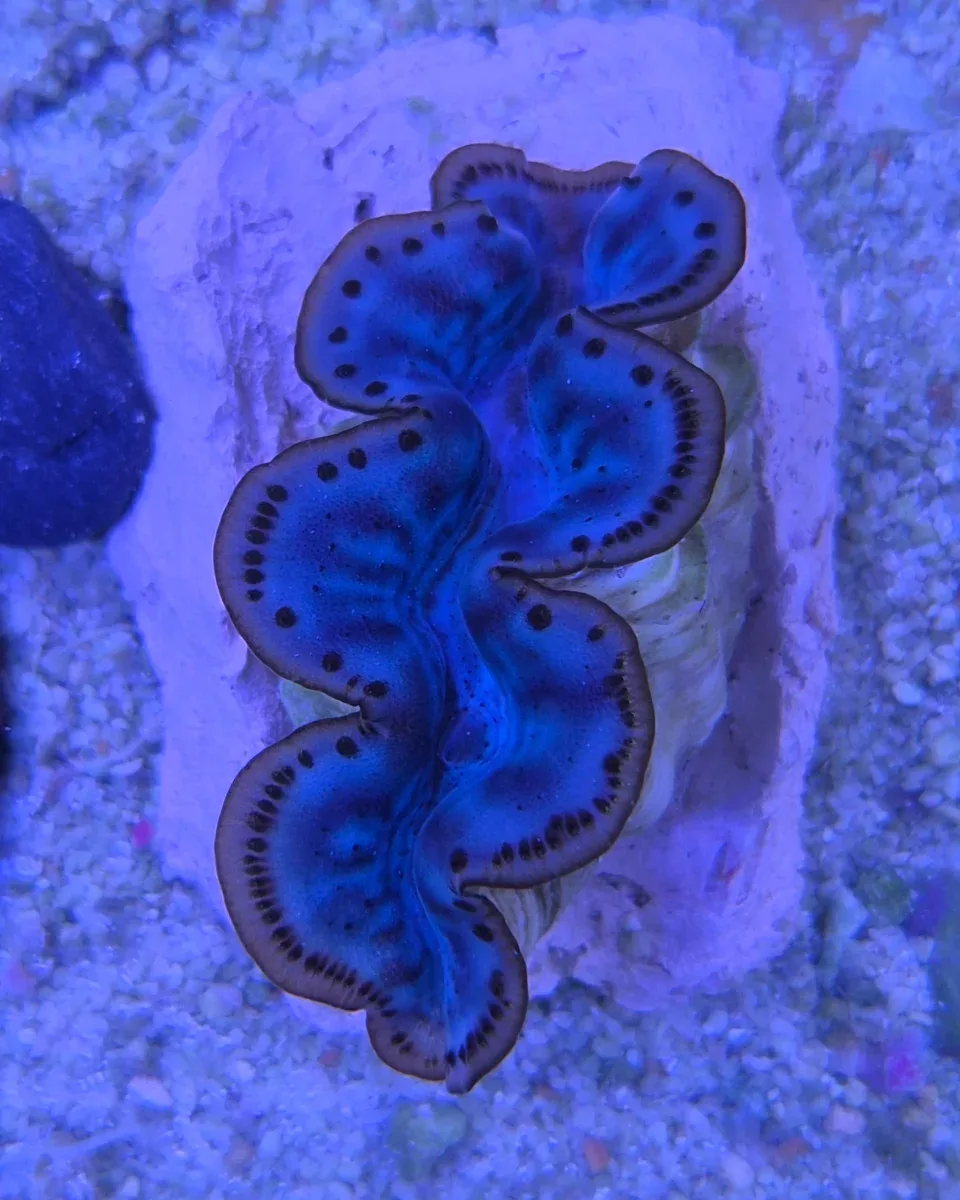
Kasvatettu Maxima Clam (Aquacultured) – Tridacna maxima (5cm) Common name: Maxima Clam Scientific name: Tridacna maxima Origin: Indo-Pacific (aquacultured) Adult size: Up to 30–35 cm (usually smaller in aquariums) Temperament: Peaceful Diet: Photosynthetic (zooxanthellae) + filter feeder Minimum tank size: 100–150 L+ (mature reef system) Reef safe: Yes — Aquacultured Specimen This clam is aquacultured, meaning it has been sustainably farmed rather than collected from the wild. Benefits of aquacultured clams: • More sustainable and environmentally responsible • Typically hardier and better adapted to aquarium life • Reduced impact on natural reef ecosystems — Overview Tridacna maxima is one of the most vibrant and sought-after giant clams in the reef hobby. Its mantle displays intense blues, turquoises, golds and intricate patterns, making it a true showpiece in reef aquariums. This species relies heavily on strong lighting due to its symbiotic zooxanthellae algae. — Placement & Lighting Maxima clams naturally attach to hard surfaces and should be placed: • On stable rockwork (not directly on sand long-term) • Under strong reef lighting (high PAR required) • In moderate, indirect flow Insufficient lighting is the most common cause of decline. — Feeding Primarily photosynthetic. In established systems, medium to large specimens generally do not require additional feeding. Very small clams (<5 cm) may benefit from occasional phytoplankton feeding. — Water Parameters Stable parameters are essential: • Salinity: 1.024–1.026 • Temperature: 24–26°C • Calcium: 400–450 ppm • KH: 7–9 dKH • Magnesium: 1250–1350 ppm • Nitrate & phosphate: Low but not zero Clams consume calcium and alkalinity as they grow. — Compatibility Peaceful and reef safe. Avoid keeping with fish known to nip at mantles, such as certain angelfish or butterflyfish. A mature, stable reef aquarium is strongly recommended for long-term success.