
Description
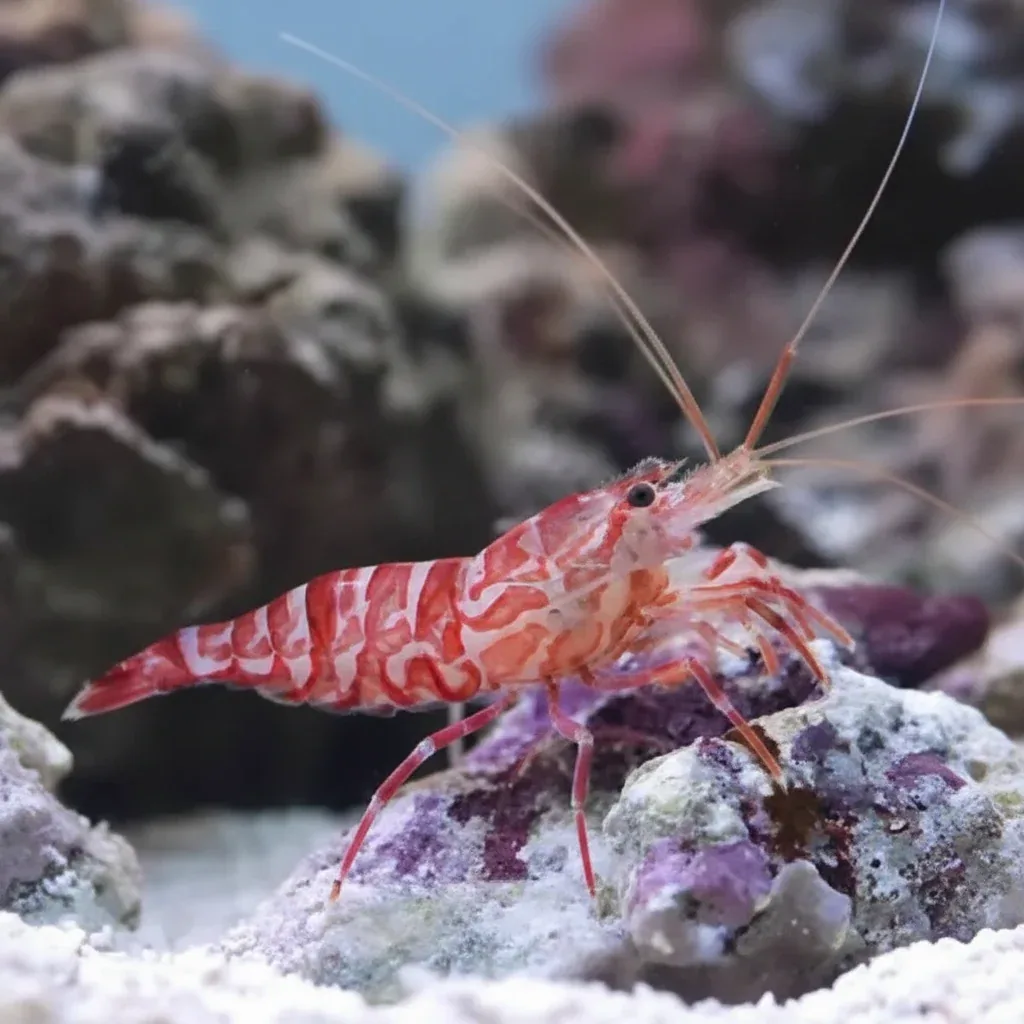
Striped Cleaner Shrimp – Lysmata kuekenthali Common name: Kuekenthals Cleaner Shrimp / Striped Shrimp Scientific name: Lysmata kuekenthali Adult size: 5–6 cm Minimum tank size: 50 L+ Temperament: Peaceful Reef safe: Yes Overview The Striped Cleaner Shrimp (Lysmata kuekenthali) is a highly useful and attractive addition to marine aquariums. It is widely reported to eat Aiptasia (glass anemones), often considered even more effective than the common Peppermint Shrimp (Lysmata wurdemanni). In addition to pest control, this species functions as a true cleaner shrimp, removing parasites and dead skin from fish. A multi-purpose and beneficial member of any reef system. Behavior & Social Structure Peaceful and sociable. Can be kept alone, but thrives in pairs or small groups. Often establishes a “cleaning station” where fish voluntarily visit and wait to be cleaned. Like all shrimps, it molts regularly. During molting, it sheds its external skeleton and hides until the new shell hardens. At this time, it is particularly vulnerable and requires safe hiding places. Feeding Primarily feeds on: • Fish parasites and dead tissue • Aiptasia (glass anemones) • Leftover food and detritus Also reported to consume Acropora Eating Flatworms (AEFW) and their eggs. Unlike some Lysmata wurdemanni, this species usually leaves corals, including LPS, untouched. Key Characteristics • Eats parasites • Effective cleaner shrimp • Helps control Aiptasia • Grows to about 5–6 cm • Can be kept singly or in pairs/groups • Requires plenty of hiding places • Generally reef safe Care Notes Provide stable water parameters and ample rockwork with caves. Regular feeding ensures better behavior and reduces the risk of opportunistic nipping. An excellent addition to reef aquariums seeking both biological pest control and natural cleaning behavior.